What box do I check?

This is the first guest blogger post in the #SAMid series. Thanks to author Chelsea O’Brien.

I’m not sure if I’m mid-career. I’m not even sure if I have what’s called a career, but I’m certainly not an entry-level professional. To me, where I am in my career path only matters in two ways: my paycheck (I can barely afford to support two people on my wage from my job in higher ed) and when I have to check a box to label myself (e.g. NASPA forms). I’m happy doing what I’m doing. I contribute to student success, watch students enter and graduate from undergraduate and graduate programs, contribute to search committees, and continually learn.

Some of the benefits of not being an entry-level professional is that I now see and understand there are different paths in higher ed. There is no “one” path, no “true” path. There are many paths and all are true to the person making them. I’m also much more balanced. All of my various jobs have taught me a lot of things including patience, balance, and boundaries. I’m also learning that there are some really fantastic leaders in higher ed, and that I shouldn’t settle for terrible ones. I won’t settle for terrible ones or bad jobs. I can’t make that sacrifice, no matter how long I might be in that position. I learned that lesson the hard way.

There are some drawbacks to where I am in my professional career: I’m still seen as young, as someone not in a professional-level job, as someone who isn’t a legitimate campus partner in certain things. I don’t supervise other professionals, only students. I don’t directly handle budgets, only credit cards and invoices. Finding my next job will probably be difficult because of these things. I’m also in a weird mid-place, where new professionals don’t quite respect my opinion because I’ve “only” been in higher ed a few years, and more seasoned professionals still view me as a new professional.

Some of the things I’ve learned in my years since being an RA have lead to really important life lessons for myself, and I wish I had known them or had accepted them as a young professional:

  • There are some things you don’t compromise about.
  • Don’t take a job you don’t want just to get into higher ed.
  • There is no shame in working outside of higher ed to pay your bills or to make you happy.
  • There is no shame in leaving higher ed.
  • Stay loyal to people, not things. Things can’t be loyal back.
  • Always be ready to lose your job, always have your resume updated, always have savings in case the worst happens.
  • Document your transferable skills, you never know when you’ll need a part-time job.
  • You have a ton of skills, you just need to figure out how to translate them to non-higher ed jobs.
  • HR and campus partners are not there to look out for you, they are there to protect the institution.

Some of the major professional lessons I’ve learned have to do with leadership and expectations set by Senior Student Affairs Offices on campus, and even senior vice presidents. It’s hard to find partners, but it’s even harder to work with partners when certain populations or needs of populations are ignored. As someone with experience and contact with students but also a fresh perspective, I can see needs not being met. While those populations of students might not fit into a larger plan, they’re still important. For me, it’s hard to feel legitimate in asking for some time, when I see patterns of behavior that show some populations don’t matter. I also see the needs of different levels of staff on campus and I hope SSAOs require and support professional development of everyone, including support staff. As well as contribution of that development to the larger campus community.

My favorite part of my current position is contributing to student success and connecting to students. My career label isn’t as as important to me as what I do with my career. I don’t often think about how to label my career, except when I have to check a box on a form. That question always makes me pause. It makes me question myself, my choices, my career, my path, and my future. My career, like my life, is messy. I can’t fit it neatly into one of those boxes and I always want to not answer that question. But I usually cave, choose whichever box fits best (it’s like the SATs all over again), and move on.
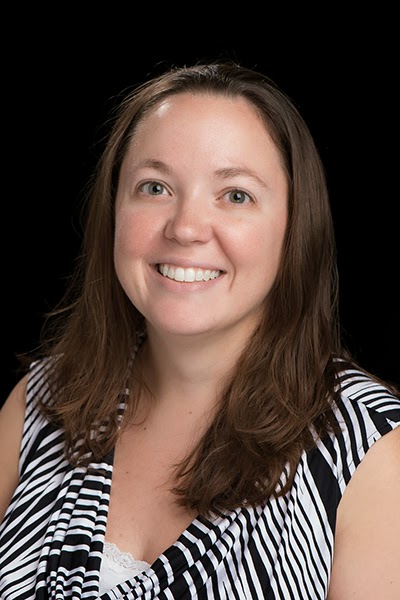
Chelsea O'Brien

Chelsea has worked for RIT for over three years and enjoys her job as an office manager. Outside of work, she hangs out with her husband, fixes up her house, gardens, and cooks. Professionally, Chelsea is interested in student veterans, adult students, and talking about what success means. She hangs out on Twitter as @ChelseaMDO.

Giving passion the heave ho

What do I want to be when I grow up? Should I apply for that job or not?

What if higher ed is my purpose and I won’t let myself be excited or passionate because I think I am supposed to want something else? Like a non-profit job or something more cause-y? (Survivor guilt is real.)

Passion. Blerg. That nebulous gold standard that higher ed professionals think is a prerequisite to advancement, success, and fulfillment.

Usually, I am able to rein myself in and talk myself down from the passion precipice. Some days it takes longer than others. Thankfully, yesterday was an easier day. Because deep down, when I shut out the noise, here is what I know to be true.

You can be good at something and not have it be your passion.

I know plenty of colleagues who aren’t passionate. They are professional, timely, honest, committed, organized, focused. They come to work every day. They do good work. Then, they go home and live their lives. Wake up. Repeat. And really, working on a college campus isn’t such a bad place to not be passionate! Most campuses are beautiful. Here in the Midwest I get to witness the changing seasons. I work with young people who challenge me. Higher ed is relatively stable. I am fortunate to have health insurance and retirement benefits, and vacation.

What does passion even mean? Who says? When did passion become the measuring stick of higher ed professionalism? Who makes all these silly rules and why do we believe them? I am calling your bluff, higher ed.

In his pithy and profound book, Let your life speak, Parker Palmer wrote:

“Trying to live some else’s life, or to live by an abstract norm, will invariably fail- and may even do great damage.”

Abstract norm (passion). Great damage (self-doubt, survivor guilt, fear, anger, self-loathing).

What if I get a new job and hate it? What if I get a new job and don’t hate it but still do good work? There is no passion switch. It’s not like some magical position will be created just for me (or you) and then all of sudden I’ll wake up and say, “Now I am passionate!” One of the priests from our parish, Fr. Joe, used to say, “You don’t do one thing once and then say, Oh, now I am holy! It’s a process!”

I am choosing to give passion the old heave-ho and flipping the script for myself. I will no longer let other’s expectations of my passion dictate what I apply for (or not), how I choose to operate on a day-to-day basis (or not), and how I choose to see myself.

Passion and work are not mutually exclusive. You can have one without the other. Passion doesn’t automatically make you effective. You can be good at something and not have it be your passion. I think that is threatening to some people in higher ed. It confuses them because they drank the passion propaganda and believe that they have to be passionate to fit in, to be effective, to be professional, to be liked and relatable.

I wrote this post last night and didn’t hit publish because the passion demons (kind of like dementors in Harry Potter) got a hold of me and I chickened out. “What if some future employer finds my blog (doubtful) and they don’t like what I wrote and then they don’t hire me?” Yeah, what if? There is nothing I can do about that. And, if we hire people for passion instead of efficacy, efficiency, professionalism, relationship-building capacity, potential, education, and experience…well, then, I think our profession has bigger problems than lack of passion.

The missing piece in the “good mother” puzzle

Today I re-tweeted an article by Kathryn Sollmann, Peace Talks for the Mommy Wars in which she re-frames the “have it all” and “lean in” rhetoric into personal, economic terms. I love this article. I think her argument is spot-on. She writes, “At the end of the day, let’s accept that we’re all good mothers…The better mother is the one who faces reality, plans for life contingencies and makes certain that she tucks her family into a future that is financially secure and safe.” Amen.

I am fortunate to have a mentor (the same one since I was 22) who told me to always know what money is going in and what money is going out. She taught me that I am responsible for my financial future and no one else. That was/is good advice. Especially since at that time, a spouse wasn’t even on the horizon. I was young, educated, and on my own. I needed to know how to pay for my car, food, health insurance, plane tickets home to NJ, etc. etc. No one else was going to do it for me. I needed to know how to do these things. And, thank goodness, I do. God forbid I am ever widowed, I could still stay afloat. I have a job, my degrees, and the know-how to figure it out, or at least ask someone who does.

But this is only part of the “good mother” puzzle. An important one, but not the only one. Of course I need to tuck my children into a financial future. But I also want to tuck them into bed and into my heart.

I have read Lean In and I think Sandberg has some great points. For some people. I spent five years of my life as a PhD student investigating work-life “balance,” which I now call work-life negotiation, and wrote an entire dissertation about women student affairs administrators with young children and how they are trying to “have it all.” I read journal articles, tweet interesting links, have entire files of studies, pie charts, and bar graphs outlining ways that corporate America can help working families. All of these things are good and important. I have even blogged about my own “negotiation” strategies sometimes on this blog.

Today I had lunch with my husband who is also a working parent in higher education. It was a date in a college cafeteria because that is what fits our lives and our budgets right now. Sitting there over the beef and broccoli and roasted turkey, I realized something. All of these “have it all” articles are missing one important piece. The articles are prescriptive, one size fits all suggestions. I’m not a fan of being told what to do. I don’t know many mothers who are.

My contribution to the missing piece is this: the better mother is the one who does all she needs to do- personally, emotionally, financially, legally, geographically, etc., etc.- because it works for her. Because it works. for. her. Happy, focused mother= well-adjusted children and family.

The focus of modern rhetoric has been on macro changes. If more mothers lean in, then “the system” will change. (Maybe.) If legislators are made more aware of the burdens of working families, government will start to act in the best interests of the people. (Umm, sure.) Yes, these are important and necessary. Is it ridiculous that in 2008 I pumped breast milk in my own locked closet with paper on the windows because that was the only place I could go? Yes. Ridiculous. Is it insane that families with a sick child or elderly parent miss important meetings at work AND with their loved ones’ medical care team for fear that something will fall through the cracks? Of course. We absolutely need changes on the macro level. No question. But shaming SAHM and working mothers (or fathers) into leaning in, or wanting to have it all isn’t the answer.

I don’t have the answer. But, I have my own experience, I have my own answer. And what I have learned is this: forget everyone else and focus on what works for you. What worked for me as a working mother was to leave a Director level position and come home to a less than mid level advising position 10 minutes from my house. And guess what, NO ONE said boo to me. The person who was shaming me into thinking that I was derailing my own fast track train to having it all was me. I thought that giving up this job made me a hero or even better, a working mother martyr. Neither of these labels is true.

I gave up…nothing. And gained everything.

When I told people at my former institution that I was leaving because a job 5 miles from home opened up, every other woman (mother or not) in that office said this, “Oh, well, of course. That makes soo much sense. The little people in your life will be so happy.”

The little people in my life were indeed happy. Especially the three year old (who is now six and a giant!). When I was gone 60 hours/week (15 of which were spent driving the autobahn that is I-96 East in MI), he barely spoke to me. I saw my boys for 15 minutes each morning. I forced them to snuggle with me because I needed to leave the house with their morning smell still on my shirt. When I came home at 530pm (if I was lucky), the three year old wouldn’t speak to me. Sometimes he would open up and start talking to me over dinner. Sometimes he never spoke to me; he avoided my loving, hopeful eyes. This was his little three year old way of telling me that he resented me being away for so long. I resented it, too, but was constantly torn between wanting to “have it all” by using the degree I had just spent five long years earning, and wanting to be a “good mother.”

At the time, a fellow working mother told me that my son’s not speaking to me when I came home was about him and not me. He was three years old. Maybe that is how she would have approached the same situation. But for me, that was not working. I was actually starting to get really good at my job when I left it. But I was not the kind of mother I wanted to be. I missed everything- drop-off, pick-up, class trips, laughing at the breakfast table. And, I missed them. I missed them. Much of the modern talk is about the children. How are the children impacted by a parent’s work-outside-the-home status? What are the differences between children in daycare and those not? The good news: there is no difference.

What I think is missing from this rhetoric is the other side. The mother’s side. My side. I saw very little of myself in all of these articles screaming at me to keep my fast track job. I missed my children and my husband. I needed them. I missed them so much I ached. Eventually the three year old would have been fine. But I am not sure that I would have been fine. I was tired all the time. I was stressed out from driving. I started clenching my jaw at night (and now need a bite guard which I am getting tomorrow).

I tried the stay-at-home mom thing, too. Twice. Hated it. I was not good at it. I would be a horrible stay-at-home mom. I was also a horrible “have it all” mom.

For now, I am a mid-life, mid-career, mid-western mom who does not have it all. But, I am pretty darn close. I am happy. My boys are happy. I go to work and I help people. I help students be better versions of themselves and I love it. Turns out, my current position pays even more than my last one and I am no longer spending money commuting, so double bonus. Tucking them and myself into that financial future.

My real legacy, my “having it all” is my sons. They are the micro changes that will go out into the world and make macro differences. If that happens, when that happens, then I really will have it all.

That same mentor who taught me to take charge of my financial future also told me once, “your life right now is not your life forever.” Preach.