What box do I check?

This is the first guest blogger post in the #SAMid series. Thanks to author Chelsea O’Brien.

I’m not sure if I’m mid-career. I’m not even sure if I have what’s called a career, but I’m certainly not an entry-level professional. To me, where I am in my career path only matters in two ways: my paycheck (I can barely afford to support two people on my wage from my job in higher ed) and when I have to check a box to label myself (e.g. NASPA forms). I’m happy doing what I’m doing. I contribute to student success, watch students enter and graduate from undergraduate and graduate programs, contribute to search committees, and continually learn.

Some of the benefits of not being an entry-level professional is that I now see and understand there are different paths in higher ed. There is no “one” path, no “true” path. There are many paths and all are true to the person making them. I’m also much more balanced. All of my various jobs have taught me a lot of things including patience, balance, and boundaries. I’m also learning that there are some really fantastic leaders in higher ed, and that I shouldn’t settle for terrible ones. I won’t settle for terrible ones or bad jobs. I can’t make that sacrifice, no matter how long I might be in that position. I learned that lesson the hard way.

There are some drawbacks to where I am in my professional career: I’m still seen as young, as someone not in a professional-level job, as someone who isn’t a legitimate campus partner in certain things. I don’t supervise other professionals, only students. I don’t directly handle budgets, only credit cards and invoices. Finding my next job will probably be difficult because of these things. I’m also in a weird mid-place, where new professionals don’t quite respect my opinion because I’ve “only” been in higher ed a few years, and more seasoned professionals still view me as a new professional.

Some of the things I’ve learned in my years since being an RA have lead to really important life lessons for myself, and I wish I had known them or had accepted them as a young professional:

  • There are some things you don’t compromise about.
  • Don’t take a job you don’t want just to get into higher ed.
  • There is no shame in working outside of higher ed to pay your bills or to make you happy.
  • There is no shame in leaving higher ed.
  • Stay loyal to people, not things. Things can’t be loyal back.
  • Always be ready to lose your job, always have your resume updated, always have savings in case the worst happens.
  • Document your transferable skills, you never know when you’ll need a part-time job.
  • You have a ton of skills, you just need to figure out how to translate them to non-higher ed jobs.
  • HR and campus partners are not there to look out for you, they are there to protect the institution.

Some of the major professional lessons I’ve learned have to do with leadership and expectations set by Senior Student Affairs Offices on campus, and even senior vice presidents. It’s hard to find partners, but it’s even harder to work with partners when certain populations or needs of populations are ignored. As someone with experience and contact with students but also a fresh perspective, I can see needs not being met. While those populations of students might not fit into a larger plan, they’re still important. For me, it’s hard to feel legitimate in asking for some time, when I see patterns of behavior that show some populations don’t matter. I also see the needs of different levels of staff on campus and I hope SSAOs require and support professional development of everyone, including support staff. As well as contribution of that development to the larger campus community.

My favorite part of my current position is contributing to student success and connecting to students. My career label isn’t as as important to me as what I do with my career. I don’t often think about how to label my career, except when I have to check a box on a form. That question always makes me pause. It makes me question myself, my choices, my career, my path, and my future. My career, like my life, is messy. I can’t fit it neatly into one of those boxes and I always want to not answer that question. But I usually cave, choose whichever box fits best (it’s like the SATs all over again), and move on.
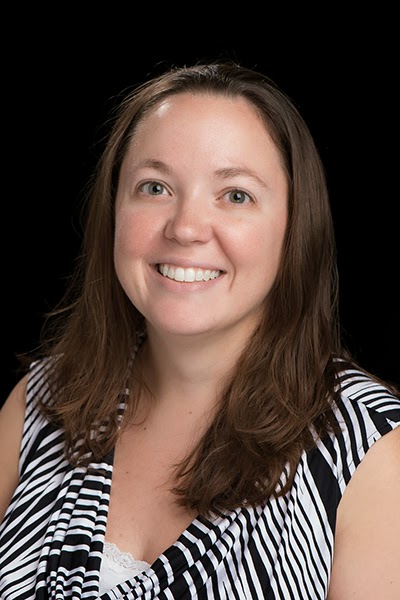
Chelsea O'Brien

Chelsea has worked for RIT for over three years and enjoys her job as an office manager. Outside of work, she hangs out with her husband, fixes up her house, gardens, and cooks. Professionally, Chelsea is interested in student veterans, adult students, and talking about what success means. She hangs out on Twitter as @ChelseaMDO.

What do you do when your why changes?

I am currently reading Simon Sinek’s book, Start with why. He suggests that successful people, organizations, teams, and  companies are those that have a clear why. They never lose sight of their why. Everything they do (how and what) is focused on their why. Floundering organizations lost sight of their why and became fixated on how and what.

I started this “career” in 1999 with a clear why.

Why- I believed that students could get the most of their college experiences by being aware of the opportunities available to them and then taking full advantage of them.

How- higher education administration

What- student affairs programs and services that help students

I have been floundering since 2010. Rudderless.

I am no longer interested in things that (to me) are silly or time sucks. My tolerance for BS is very low and my BS meter is on high alert. Yik Yak and student development theory are irrelevant in my day-to-day work. I know I am done when students email me with seemingly innocuous questions and I want to blow a gasket. Thankfully I am mature enough not to do so in public. But, the fact that I even want to is very telling.

How did I get here? I used to be passionate (barf) about my work. I used to believe that it mattered. I have been beating myself up asking “When did I lose my why? How do I get it back?” Reading this book, praying, listening to trusted friends and mentors, and letting go of some things has provided clarity.

I didn’t lose my why. My why (your why) isn’t a set of car keys. You don’t lose them and then find them again. A why is never lost.

My why changed on 12/12/2008 when my son was diagnosed with cancer. I wish that this wasn’t my why. Some days, I hate my why. I wish that I could change my why. But, I can’t. I know too much and I cannot go back to who I was before my son got sick. Truthfully, for me, going back would be a disservice to him and his fight, to our family’s fight, to my personal fight to become a better mother, a better person, an informed advocate.

I have spent the last five years (!?!?!)  trying to make myself into someone I am not. I have been trying to convince myself that I want things I do not want. That I am supposed to want them. I am a square peg and I’ve been trying to force myself into the round hole of student affairs.

My why changed but my situation has not. Even writing that is liberating. Gosh that really is it. I am not crazy. I am not incompetent. I am not a bad person or a bad professional. So what do you do when your why changes?

I. have. no. idea.

But I feel lighter than I have felt in years. And I am excited to see where the path will go next.

What would happen to “busy” if…

Earlier this morning, I posted this on Twitter “In higher education, presence is more important than contribution, effectiveness, efficiency.” The glorification of busy is rampant. The American “busy” rhetoric stems from fear. If we are busy, then we are productive and therefore, valuable. Neither of these things are true. But we keep doing it, don’t we? We post on Twitter, Facebook, Instagram, Snapchat, LinkedIn on and on and on. “Look at me!” “Look at me at this conference!”  “Look at me presenting this workshop!” Look at me writing this blogpost!” (irony anyone?)

Busy doesn’t equal productivity. Busy is just spinning wheels. Busy is for others, about others. And our value comes from who we are and the unique gifts and talents we bring, not a fancy Excel spreadsheet or working til 8pm every night. We need a workplace shift, a recognition and reward shift to productivity, accountability, impact, and efficacy. I bet that if we were judged on those things, then employee engagement and loyalty will increase. I want to be judged for the good that I produce, my outcomes, the things I create, the programs I make better, the relationships that I nurture. I do not want to be judged on how frazzled I look while trying to push paper.

I want to know what my employer believes and then I want to believe what my employer believes.

“If you hire people just because they can do a job, they’ll work for your money. But if you hire people who believe what you believe, they’ll work for you with blood, sweat, and tears.” – Simon Sinek

I would suggest that this really is what most people are looking for. As humans, we are social creatures. We were designed to belong- to a cause, purpose, another person, a family, a group. We need each other. We are hungry to feel that we belong. Each of us has a sign around our necks that says “See me. Believe in me.” What are we doing to really honor this in ourselves, our colleagues, students?

What would happen to busy if we started working for belief, rather than a job/money? Of course, I need this job (kids, mortgage, retirement) and some of the time I enjoy it. But what would happen if instead of presence, just taking up space, I was compensated/recognized/rewarded for my impact? What if, in higher education we started rewarding efficiency and efficacy, rather than presence? I know for me, I would start giving my blood, sweat, and tears and not just my time.